Mess into missions. Chores become challenges.
Snap the mess and Boomph turns it into tiny missions kids can tackle one at a time, with visible time, instant boosts and a real reward at the finish. Designed around common ADHD barriers. Made for every kid.
14 days free · then £3.99/month or £29.99/year · cancel anytime
How it works
1 · Snap the mess
Photograph the playroom, the dishwasher, the shoe explosion. The AI finds every job hiding in the photo and mission control tracks it all.
2 · Set the prize
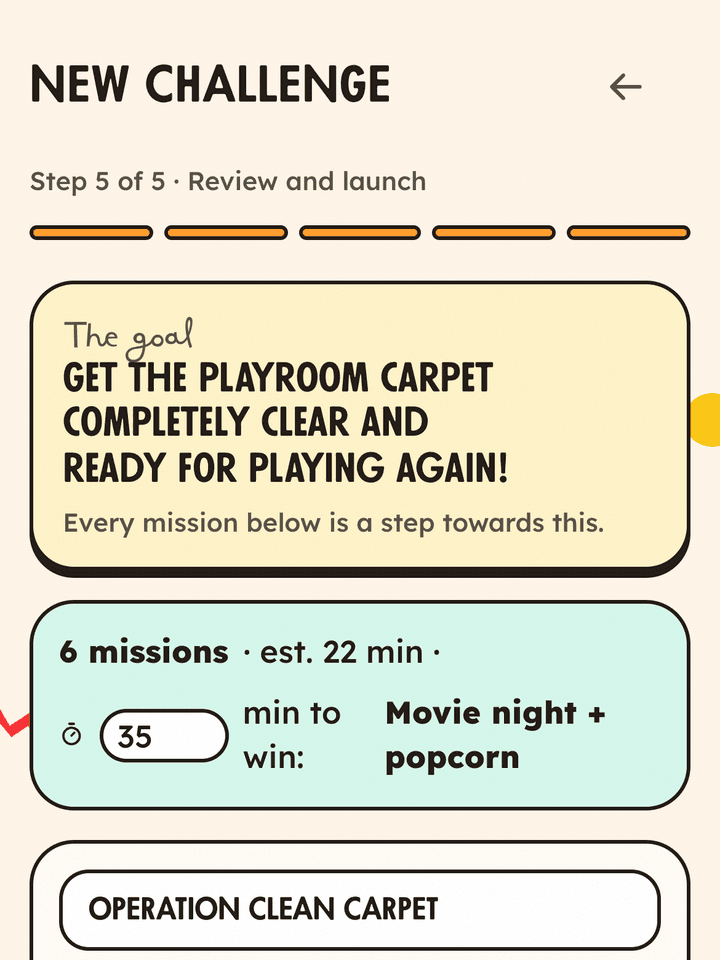
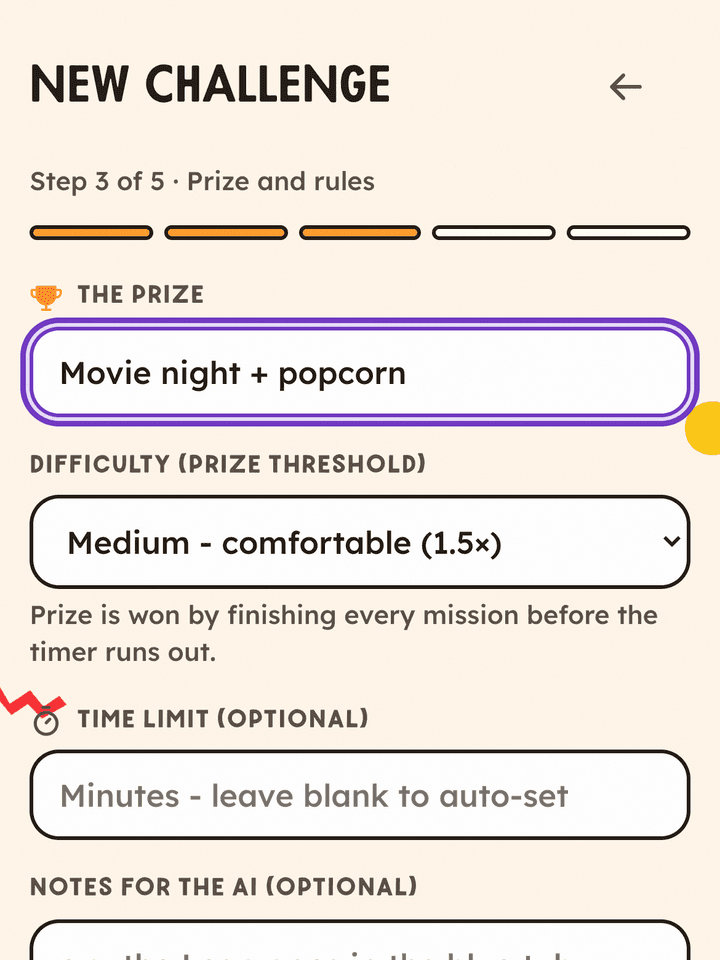
You pick the reward, the difficulty and any house rules. The AI sizes every mission to your child’s age. One tiny action at a time.
3 · Prove it, win it
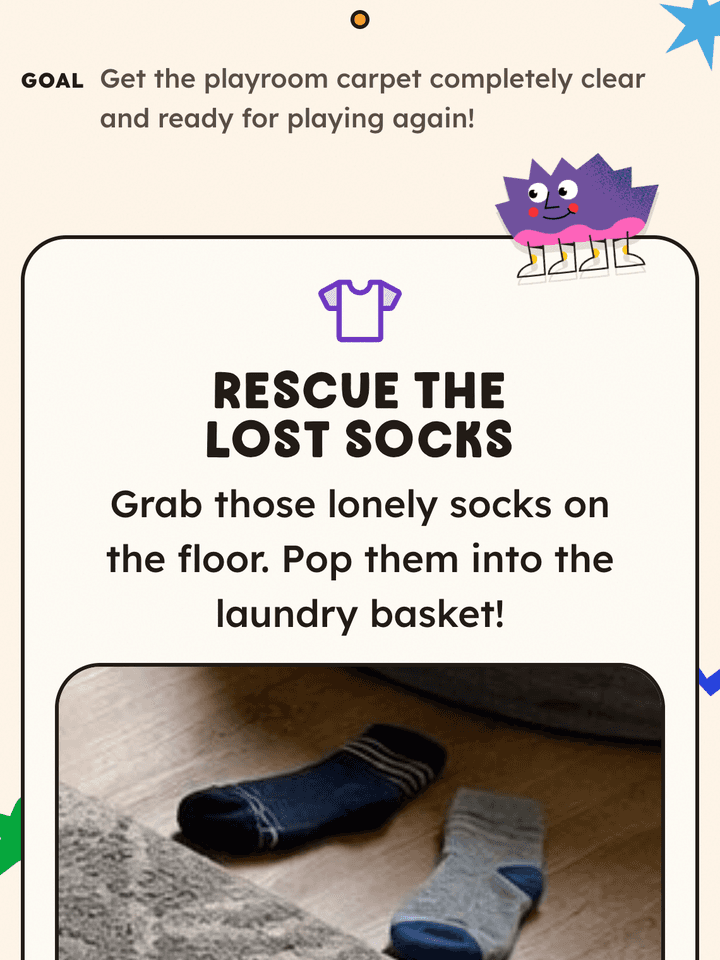
A visible timer, a photo crop of the exact spot, a companion cheering along. Kid snaps proof, the friendly AI referee checks it, stickers rain down. Beat every zone and the reward is theirs.
Built on the science, not the nagging
Every design decision below comes from published research, and we link to it. Where the evidence is thin we say that too. Boomph itself has not been trialled, and we would like to change that.
Small rewards now beat big rewards later
Children with ADHD tend, on average, to choose a smaller reward now over a larger one later. A meta-analysis of 37 studies covering 3,763 people found the gap was widest when the reward on offer was real rather than hypothetical. So every mission pays out something real straight away, and the prize sits on top rather than instead.
Marx et al. 2021, meta-analysis of 37 studiesWhat behaviour approaches actually change
The largest meta-analysis of behavioural interventions, 32 randomised trials, found they improve parenting and conduct at home. Under blinded assessment it did not find a change in core ADHD symptoms. Boomph is built to make the household calmer, not to treat anything, and we would rather say that than imply otherwise.
Daley et al. 2014, European ADHD Guidelines GroupTime is harder to judge
A meta-analysis of 27 studies covering 1,620 children and adolescents with ADHD found they judge how long things take less accurately and less consistently than their peers. Boomph keeps a timer on screen for that reason. The one classroom experiment we know of found a visible timer cut anxiety and fidgeting but did not improve scores, so we will not claim it does.
Zheng et al. 2022, meta-analysis in childrenShorter bursts, with breaks
UK NICE guidance lists shorter periods of focus with movement breaks among the changes that should be in place for ADHD, alongside things like seating and headphones. Boomph turns a heap into 2 to 10 minute missions, one at a time, easiest first. Breaking a job down is standard practice rather than a proven treatment in itself, and we say so.
NICE guideline NG87Stopping is allowed
The same NICE guidance names movement breaks and 'I need a break' cards. Kids can freeze the timer with one tap for dinner, a breather or a wobbly moment, and a grown-up gets pinged. The game waits. Nothing is lost for stopping.
NICE guideline NG87Where the evidence is thinnest
A mascot rides along on every mission. That idea comes from body doubling, which many neurodivergent adults say helps them. The largest study is a survey of 220 adults that recorded what people say, not whether it works, and it excluded under-18s. Nothing has been tested in children. We built it because families told us it helped, not because it is proven.
Eagle et al. 2024, survey of 220 adultsQuestions parents ask
What is Boomph?
Boomph is a chore app for kids that turns photos of real household mess into small, timed missions. A parent snaps the mess, the AI finds every job hiding in the photo, and kids play them one at a time with a visible timer, instant boosts and a reward at the finish. It is made by Rough, an Edinburgh design studio.
How much does Boomph cost?
Boomph is free for 14 days, then £3.99 a month or £29.99 a year, with a £69.99 lifetime option. One subscription covers the whole family, and you can cancel anytime.
What ages is Boomph for?
Boomph suits any kid old enough to tackle small household jobs. The AI sizes every mission to your child’s age, and parents set the difficulty, the reward and any house rules, so the same photo produces different missions for a five-year-old and a ten-year-old.
Does Boomph help with ADHD?
Boomph makes no medical claims. It is designed around common ADHD barriers to starting and following through, such as time being hard to judge and big jobs feeling impossible, and every design decision links to published research on this page. Boomph itself has not been trialled, and we would like to change that.
What happens to the photos?
Photos stay private to your family. Every upload passes a safety check that rejects photos showing a face before anything is stored, and photos are used only to create missions and check they are done. Nothing is shared or made public.
What if my kid stops halfway through a mission?
Nothing is lost for stopping. Kids can freeze the timer with one tap for dinner, a breather or a wobbly moment, and a grown-up gets pinged. The game waits until they are ready to carry on.
How does the AI checking work?
When a mission is done, the kid snaps a proof photo of the exact spot and a friendly AI referee compares it with the job. Verdicts are firm but fair, a failed check never scolds the kid, and after a few honest tries the mission passes anyway.
What devices does Boomph work on?
Boomph is on iPhone and iPad now, and Android is on the way. The parent Family HQ and linked kid play also work in the browser, so a kid can play on a shared family tablet or computer.
Mess, meet your match
Boomph is out now on iPhone and iPad. Android is on the way. Family HQ and linked kid play work on the web too.
14 days free · then £3.99/month or £29.99/year · cancel anytime